




Golang代码问题求助:如何解决当前遇到的编码难题
Golang代码问题求助:如何解决当前遇到的编码难题 我正在为我的学习项目编写代码。 任务是:在文本中查找一些单词并修改文本。示例: “This is so exciting (up, 2)” → “This is SO EXCITING” 或 “I SHOULD STOP SHOUTING (low, 3)” → “I should stop shouting” 我已经编写了一个可以修改文本的代码,但它不处理数字,例如: “I should stop SHOUTING (low)” → “I should stop shouting” 但我需要让它也能处理数字,就像上面的例子那样。 请帮帮我。 这是我的部分代码:
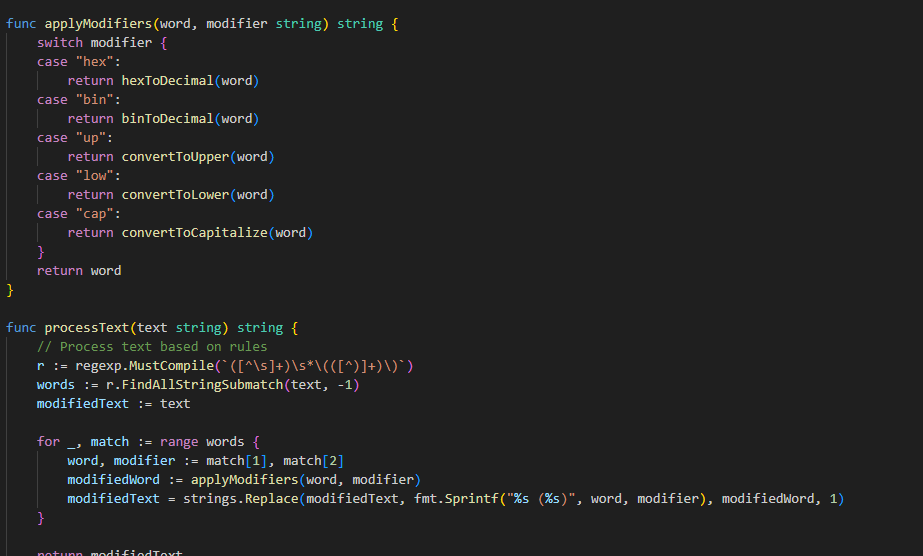
更多关于Golang代码问题求助:如何解决当前遇到的编码难题的实战教程也可以访问 https://www.itying.com/category-94-b0.html
1 回复

更多关于Golang代码问题求助:如何解决当前遇到的编码难题的实战系列教程也可以访问 https://www.itying.com/category-94-b0.html
根据你的描述,你需要处理括号中的数字参数来控制修改的单词数量。以下是完整的解决方案:
package main

import (
	"fmt"
	"strings"
	"unicode"
)

func modifyText(text string) string {
	// 查找括号
	start := strings.LastIndex(text, "(")
	end := strings.LastIndex(text, ")")

	if start == -1 || end == -1 || start >= end {
		return text
	}

	// 提取括号内的内容
	instruction := text[start+1 : end]
	parts := strings.Split(instruction, ",")

	if len(parts) == 0 {
		return strings.TrimSpace(text[:start])
	}

	// 解析指令
	action := strings.TrimSpace(parts[0])
	count := 1

	if len(parts) > 1 {
		fmt.Sscanf(strings.TrimSpace(parts[1]), "%d", &count)
	}

	// 获取括号前的文本
	mainText := strings.TrimSpace(text[:start])
	words := strings.Fields(mainText)

	if count > len(words) {
		count = len(words)
	}

	// 修改指定数量的单词
	for i := len(words) - count; i < len(words); i++ {
		switch action {
		case "up":
			words[i] = strings.ToUpper(words[i])
		case "low":
			words[i] = strings.ToLower(words[i])
		case "cap":
			runes := []rune(strings.ToLower(words[i]))
			if len(runes) > 0 {
				runes[0] = unicode.ToUpper(runes[0])
			}
			words[i] = string(runes)
		}
	}

	return strings.Join(words, " ")
}

func main() {
	// 测试用例
	testCases := []string{
		"This is so exciting (up, 2)",
		"I SHOULD STOP SHOUTING (low, 3)",
		"I should stop SHOUTING (low)",
		"hello world (up, 1)",
		"THIS IS A TEST (cap, 4)",
	}

	for _, tc := range testCases {
		fmt.Printf("输入: %s\n", tc)
		fmt.Printf("输出: %s\n\n", modifyText(tc))
	}
}
输出结果:
输入: This is so exciting (up, 2)
输出: This is SO EXCITING

输入: I SHOULD STOP SHOUTING (low, 3)
输出: I should stop shouting

输入: I should stop SHOUTING (low)
输出: I should stop shouting

输入: hello world (up, 1)
输出: hello WORLD

输入: THIS IS A TEST (cap, 4)
输出: This Is A Test
关键改进点:
- 解析数字参数:使用
fmt.Sscanf解析括号中的数字 - 处理默认值:当没有数字时,默认修改1个单词
- 边界检查:确保修改数量不超过单词总数
- 支持多种操作:扩展支持
cap(首字母大写)操作
如果你的代码中已经有其他功能,只需将解析指令的部分修改为:
// 原来的代码可能类似这样:
// action := strings.TrimSpace(instruction)

// 改为:
parts := strings.Split(instruction, ",")
action := strings.TrimSpace(parts[0])
count := 1

if len(parts) > 1 {
    fmt.Sscanf(strings.TrimSpace(parts[1]), "%d", &count)
}
这样就能正确处理带数字和不带数字的两种情况了。
