




Golang中嵌套结构体指针赋值前必须初始化的问题解析
Golang中嵌套结构体指针赋值前必须初始化的问题解析 在编码时,我遇到了一个错误: “runtime error: invalid memory address or nil pointer dereference”
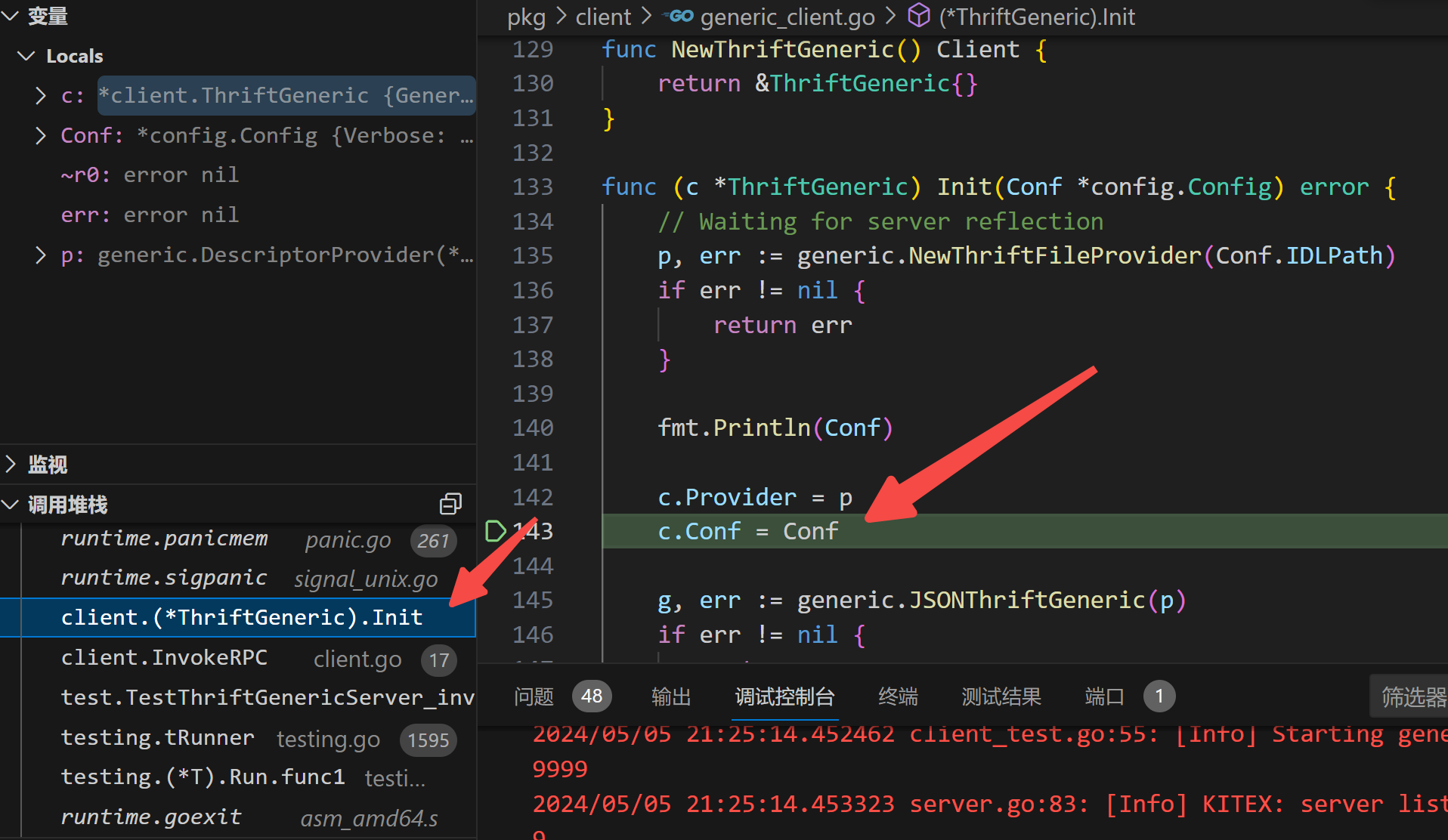
这很奇怪,遇到 “runtime error: invalid memory address or nil pointer dereference” 通常意味着访问了由 nil 指针指向的内存。
func (c *ThriftGeneric) Init(Conf *config.Config) error {
    // 等待服务器反射
    p, err := generic.NewThriftFileProvider(Conf.IDLPath)
    if err != nil {
        return err
    }

    fmt.Println(Conf)

    c.Provider = p
    // 错误发生在这里,因为指针为 nil
    c.Conf = Conf

    g, err := generic.JSONThriftGeneric(p)
    if err != nil {
        return err
    }
    c.Generic = g

    if err := c.BuildClientOptions(); err != nil {
        return err
    }

    cli, err := genericclient.NewClient(Conf.Service, c.Generic, c.ClientOpts...)
    if err != nil {
        return err
    }
    c.Client = cli
    return nil
}
为什么这里会抛出错误?是因为 c.Conf 是 nil,尽管之前它工作正常。后来,我发现我曾经重构过一次代码:
最初:
type ThriftGeneric struct {
    Client      genericclient.Client
    Generic     generic.Generic
    Conf        *config.Config
    ClientOpts  []client.Option
    CallOptions []callopt.Option
    Resp        interface{}
    Provider generic.DescriptorProvider
}

func NewThriftGeneric() Client {
    return &ThriftGeneric{}
}
重构后:
type GenericClientBase struct {
    Client      genericclient.Client
    Generic     generic.Generic
    Conf        *config.Config
    ClientOpts  []client.Option
    CallOptions []callopt.Option
    Resp        interface{}
}

type ThriftGeneric struct {
    *GenericClientBase
    Provider generic.DescriptorProvider
}

func NewThriftGeneric() Client {
    // 检查后,这里似乎有些不对劲
    // 我意识到 GenericClientBase 没有被初始化...
    return &ThriftGeneric{}
}
修改之后,一切又恢复正常了。由于 c.GenericClientBase.Conf 和 c.Conf 是同一个,直接赋值后者而无需任何更改就足够了。
func NewThriftGeneric() Client {
    return &ThriftGeneric{
        GenericClientBase: &GenericClientBase{},
    }
}
但这也是正确的:
type ThriftGeneric struct {
    GenericClientBase
    Provider generic.DescriptorProvider
}

func NewThriftGeneric() Client {
    return &ThriftGeneric{}
}
这种方法直接嵌套了 GenericClientBase 结构体,而不是使用指针。这样,当创建 ThriftGeneric 实例时,GenericClientBase 的初始化会自动发生,无需额外步骤。
我的问题是,编译器如何处理上述两种情况?如果两者都使用,ThriftGeneric 的最终内存布局会相同吗?更推荐哪一种?
更多关于Golang中嵌套结构体指针赋值前必须初始化的问题解析的实战教程也可以访问 https://www.itying.com/category-94-b0.html

更多关于Golang中嵌套结构体指针赋值前必须初始化的问题解析的实战系列教程也可以访问 https://www.itying.com/category-94-b0.html
在Go语言中,嵌套结构体的内存布局和初始化行为取决于你使用的是值嵌套还是指针嵌套。你遇到的nil pointer dereference错误正是由于指针嵌套结构体未初始化导致的。
内存布局差异
情况1:指针嵌套(你的重构后代码)
type ThriftGeneric struct {
    *GenericClientBase  // 指针嵌套
    Provider generic.DescriptorProvider
}

func NewThriftGeneric() Client {
    return &ThriftGeneric{}  // GenericClientBase 为 nil
}
内存布局:
ThriftGeneric {
    GenericClientBase: nil (8字节指针)
    Provider: zero value
}
情况2:值嵌套(你提到的正确方法)
type ThriftGeneric struct {
    GenericClientBase  // 值嵌套
    Provider generic.DescriptorProvider
}

func NewThriftGeneric() Client {
    return &ThriftGeneric{}  // GenericClientBase 自动初始化
}
内存布局:
ThriftGeneric {
    GenericClientBase: {  // 内联存储
        Client: nil
        Generic: nil
        Conf: nil
        ClientOpts: nil
        CallOptions: nil
        Resp: nil
    }
    Provider: zero value
}
编译器处理方式
指针嵌套的情况:
// 当访问 c.Conf 时,编译器实际上访问的是:
c.GenericClientBase.Conf

// 由于 GenericClientBase 是 nil,这等价于:
(*nil).Conf  // 导致 panic
值嵌套的情况:
// 当访问 c.Conf 时,编译器访问的是:
c.GenericClientBase.Conf

// GenericClientBase 是内联的值,已初始化为零值
// 这等价于访问一个已分配内存的字段
示例代码说明
你的初始化错误可以通过以下方式修复:
// 方法1:在构造函数中显式初始化指针
func NewThriftGeneric() Client {
    return &ThriftGeneric{
        GenericClientBase: &GenericClientBase{},
    }
}

// 方法2:改为值嵌套
type ThriftGeneric struct {
    GenericClientBase  // 值嵌套
    Provider generic.DescriptorProvider
}

func NewThriftGeneric() Client {
    return &ThriftGeneric{}  // 自动初始化所有字段
}

// 方法3:在方法中检查并初始化
func (c *ThriftGeneric) Init(Conf *config.Config) error {
    if c.GenericClientBase == nil {
        c.GenericClientBase = &GenericClientBase{}
    }
    c.Conf = Conf
    // ... 其他初始化代码
}
性能考虑
值嵌套:
- 内存连续,缓存友好
- 一次性分配,减少内存碎片
- 但会复制整个嵌套结构体
指针嵌套:
- 需要额外分配
- 可以共享基础结构体实例
- 允许nil值表示"未设置"状态
推荐方案
对于你的使用场景,推荐使用值嵌套:
type ThriftGeneric struct {
    GenericClientBase  // 值嵌套
    Provider generic.DescriptorProvider
}

func NewThriftGeneric() Client {
    return &ThriftGeneric{}
}
这样确保:
- 内存布局紧凑
- 自动初始化,避免nil指针错误
- 访问字段时无需额外的指针解引用
- 生命周期管理更简单
指针嵌套主要适用于需要共享基础结构体、可选嵌套或循环引用的场景。
